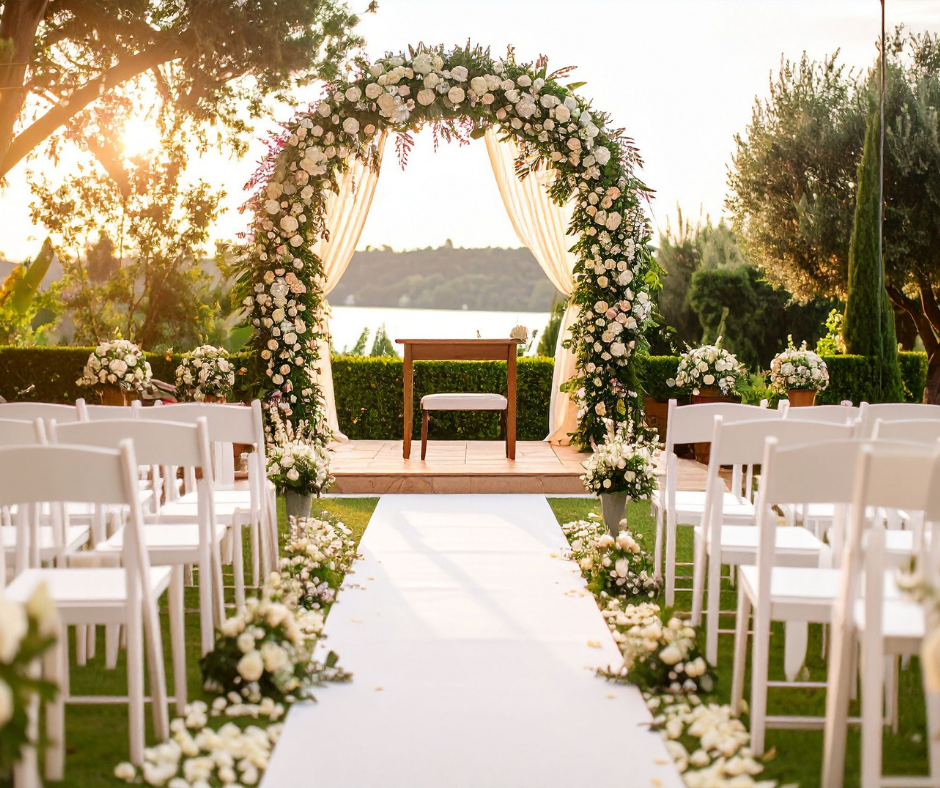
Choosing between an indoor or outdoor wedding impacts everything from atmosphere to logistics. Here’s how to decide which option fits your vision, comfort, and overall experience.
One of the first major decisions you’ll make when planning your wedding is choosing between an indoor or outdoor setting.
Both options can be beautiful. Both can create unforgettable experiences. But they offer very different advantages—and challenges.
The right choice comes down to more than just looks. It’s about comfort, logistics, flexibility, and how you want your day to feel.
Indoor weddings are often chosen for their reliability and structure.
With an indoor space, you don’t have to worry about weather disruptions, temperature swings, or unexpected conditions. Everything is contained, predictable, and easier to manage.
Benefits of indoor weddings:
Indoor spaces also tend to support more formal or polished design styles, making them a great fit for elegant or modern weddings.
Outdoor weddings offer a natural beauty that’s hard to replicate.
From mountain views to gardens to open landscapes, the setting itself becomes part of your design.
Benefits of outdoor weddings:
Outdoor events often feel more casual and immersive, especially during spring and summer months.
This is where the decision becomes more practical.
Indoor considerations:
Outdoor considerations:
Neither option is perfect—but understanding the trade-offs helps you plan more effectively.
It’s easy to focus on aesthetics, but guest comfort plays a huge role in the overall experience.
Consider:
An outdoor wedding in perfect weather can be incredible. But if conditions aren’t ideal, it can quickly become uncomfortable.
Indoor spaces tend to provide more consistency, which can make a big difference for guests of all ages.
The time of year matters—especially for outdoor weddings.
Spring and fall can offer beautiful weather, but also unpredictability. Summer can be ideal, but heat becomes a factor. Evenings may cool down quickly depending on location.
Indoor weddings offer more flexibility year-round, while outdoor weddings require more seasonal awareness and backup planning.
If you’re leaning toward an outdoor wedding, this step is critical.
Always have a backup plan.
This could include:
Having a backup doesn’t mean expecting something to go wrong—it means being prepared so you can stay relaxed no matter what happens.
Outdoor weddings often require more coordination behind the scenes.
Things like:
Indoor venues typically have these elements built in, which can simplify planning significantly.
Many couples choose a combination of indoor and outdoor spaces.
For example:
This approach allows you to enjoy the beauty of an outdoor setting while maintaining the comfort and reliability of an indoor space.
At the end of the day, the best choice is the one that supports the experience you want to create.
If you value predictability, comfort, and ease, an indoor wedding may be the better fit.
If you’re drawn to natural beauty and an open-air atmosphere—and are willing to plan for variables—an outdoor wedding could be exactly what you’re looking for.
Your wedding setting shapes more than just the backdrop—it shapes how the entire day feels.
When you choose a space that aligns with your priorities, your timeline, and your guests’ comfort, everything else becomes easier to manage—and more enjoyable to experience.


